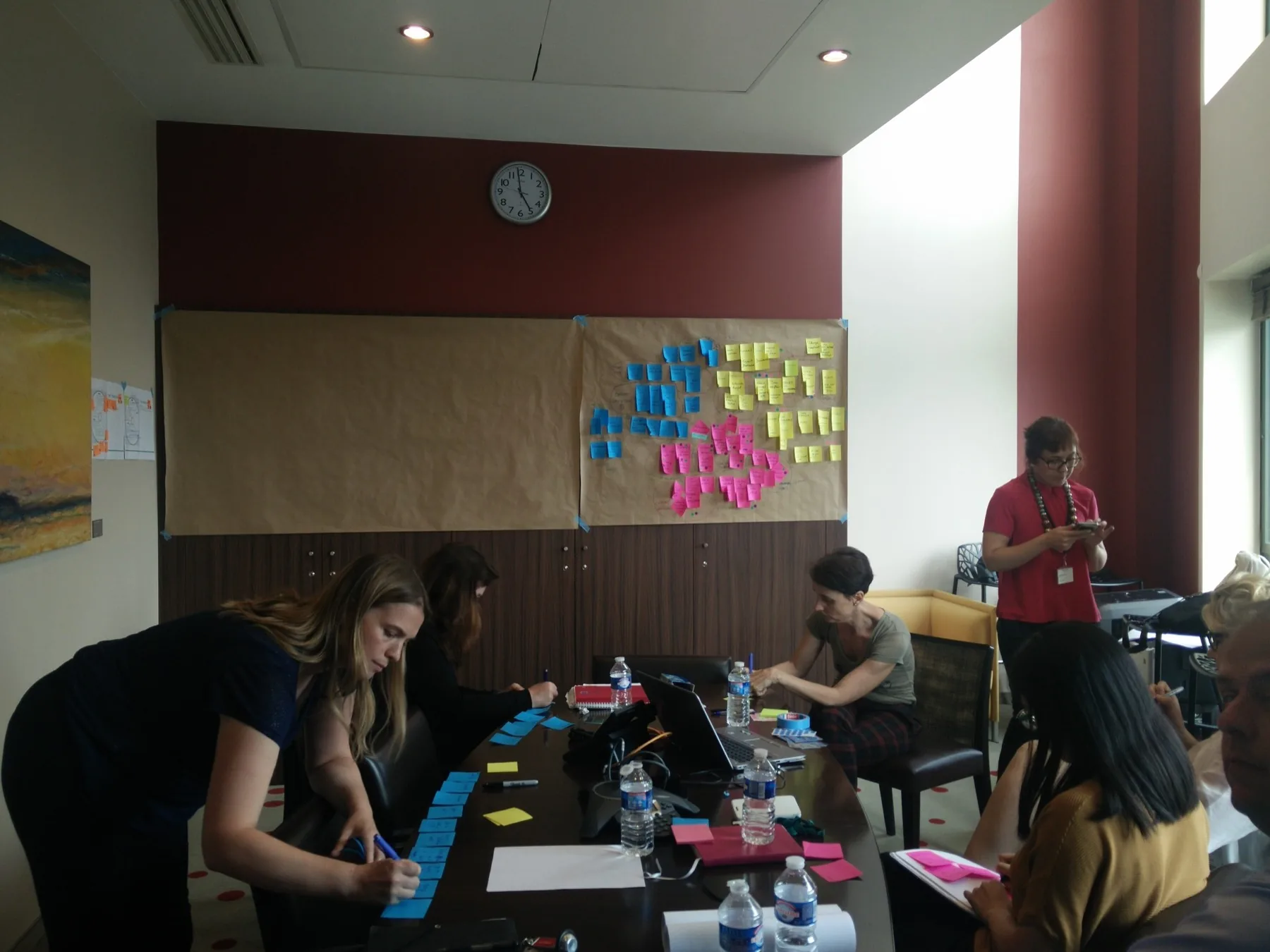
A consulting mission at Palo IT: help win BNP Paribas (one of France's largest banks), by proving the value of design in person. Discovery workshops, journey mapping, and usability testing, run on kraft paper and sticky notes, then handed over at full speed.
Embedded Design Consultant · Discovery & Research · 2017
01 · Mission
Context: Palo IT, a Paris-based technology and design consultancy, was working to win BNP Paribas as a client. The pitch needed evidence, not another slide deck. The bank's teams needed to take part in the design process and see it work. The mission was to design and run a discovery programme for an internal employee product, and make the first month useful enough for the engagement to continue.
Constraint: one month, no time to ramp up, and an audience of bankers rather than designers. Every session had to produce something stakeholders could understand at a glance. That shaped the toolkit: physical walls instead of software, handwriting instead of decks, and research materials kept in the room where decisions happened.
02 · Workshops
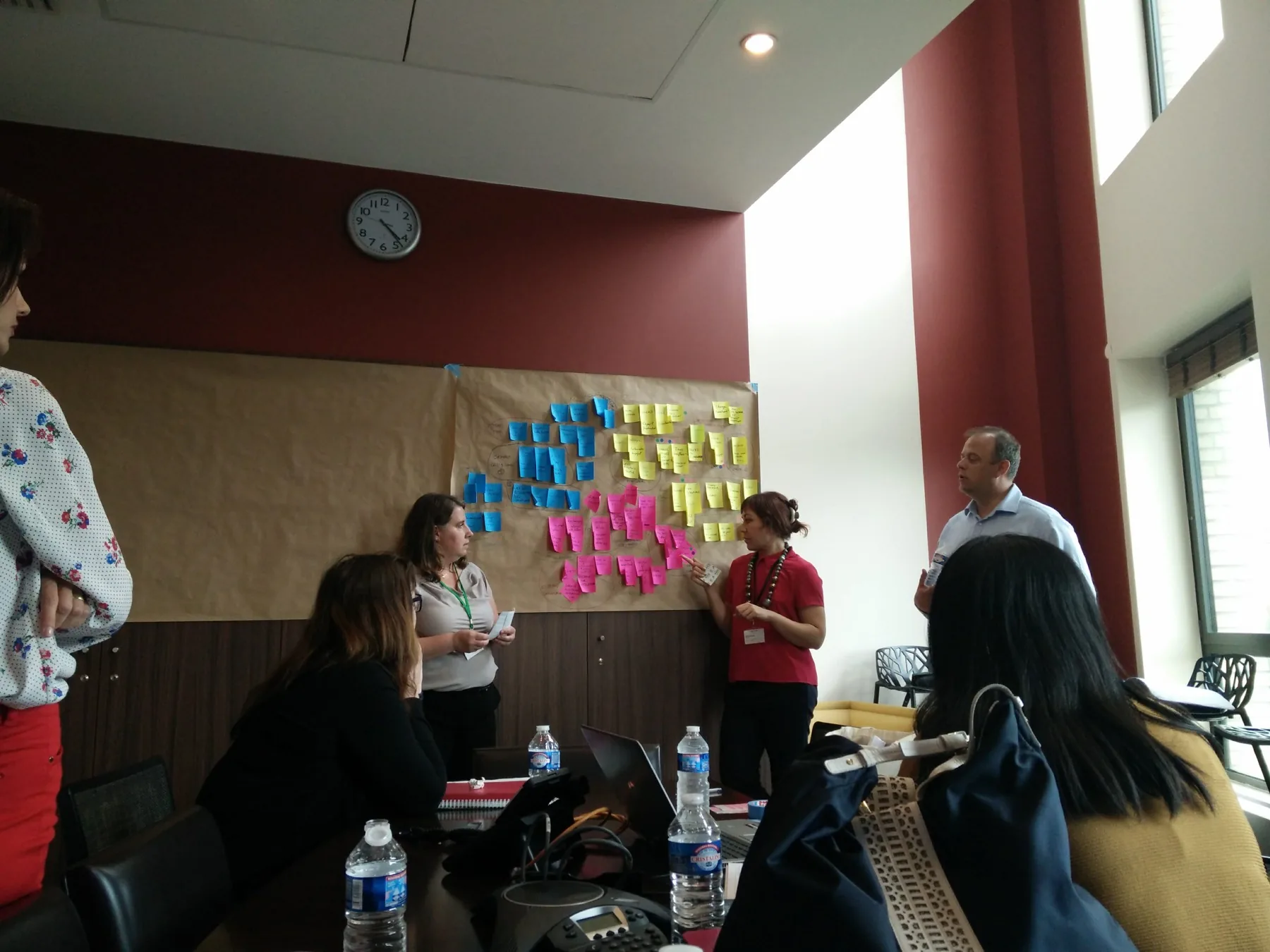
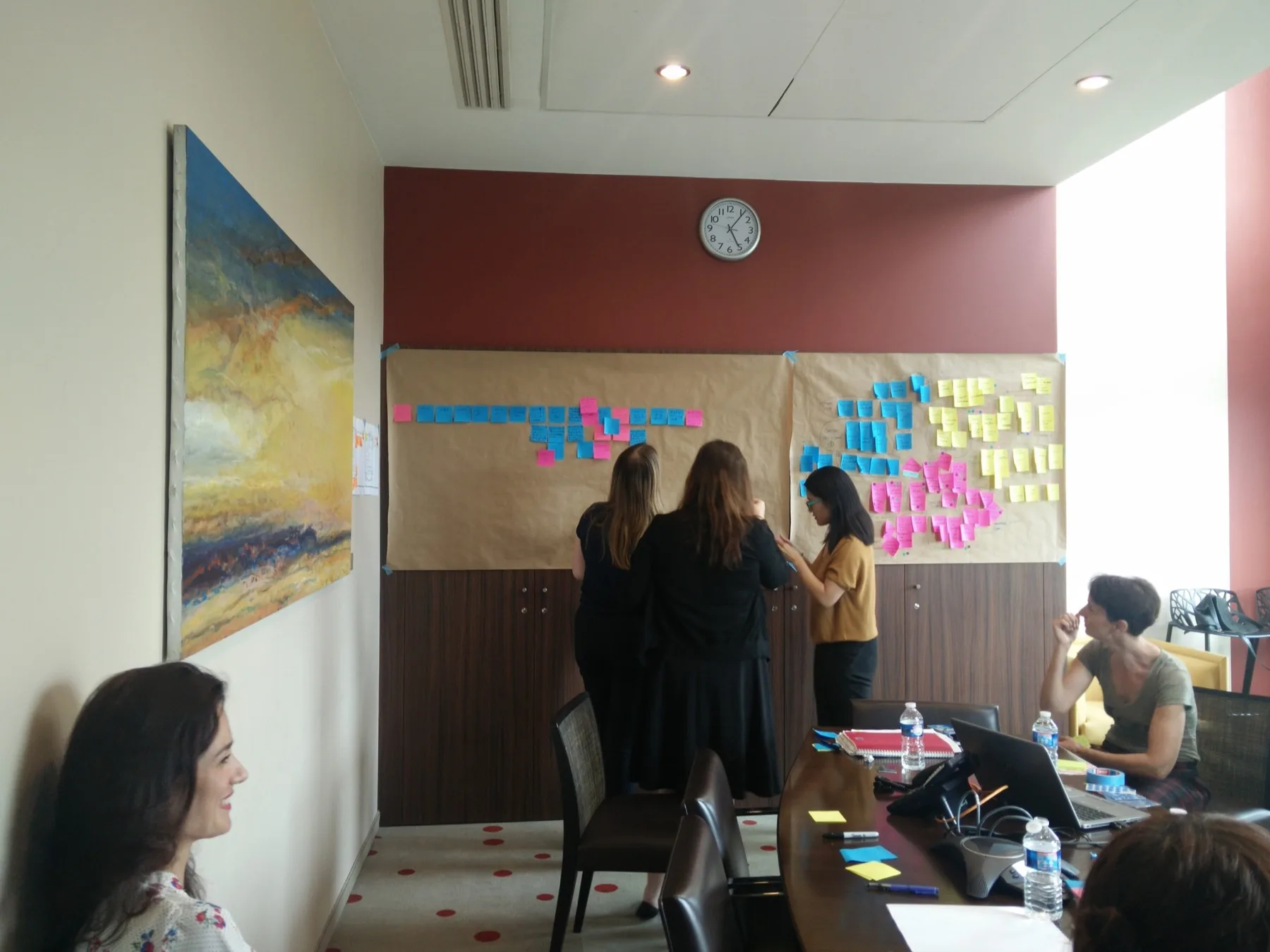
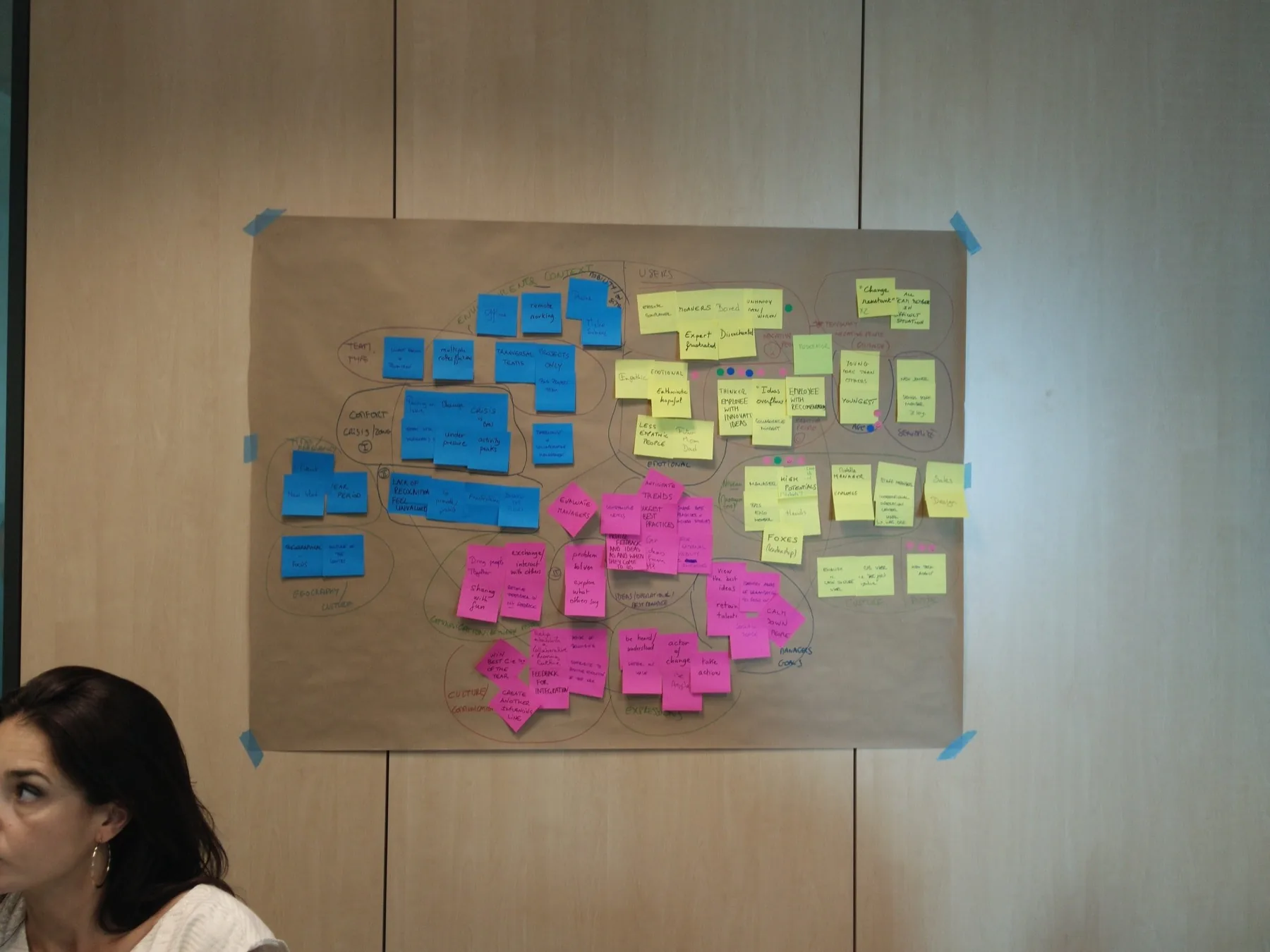
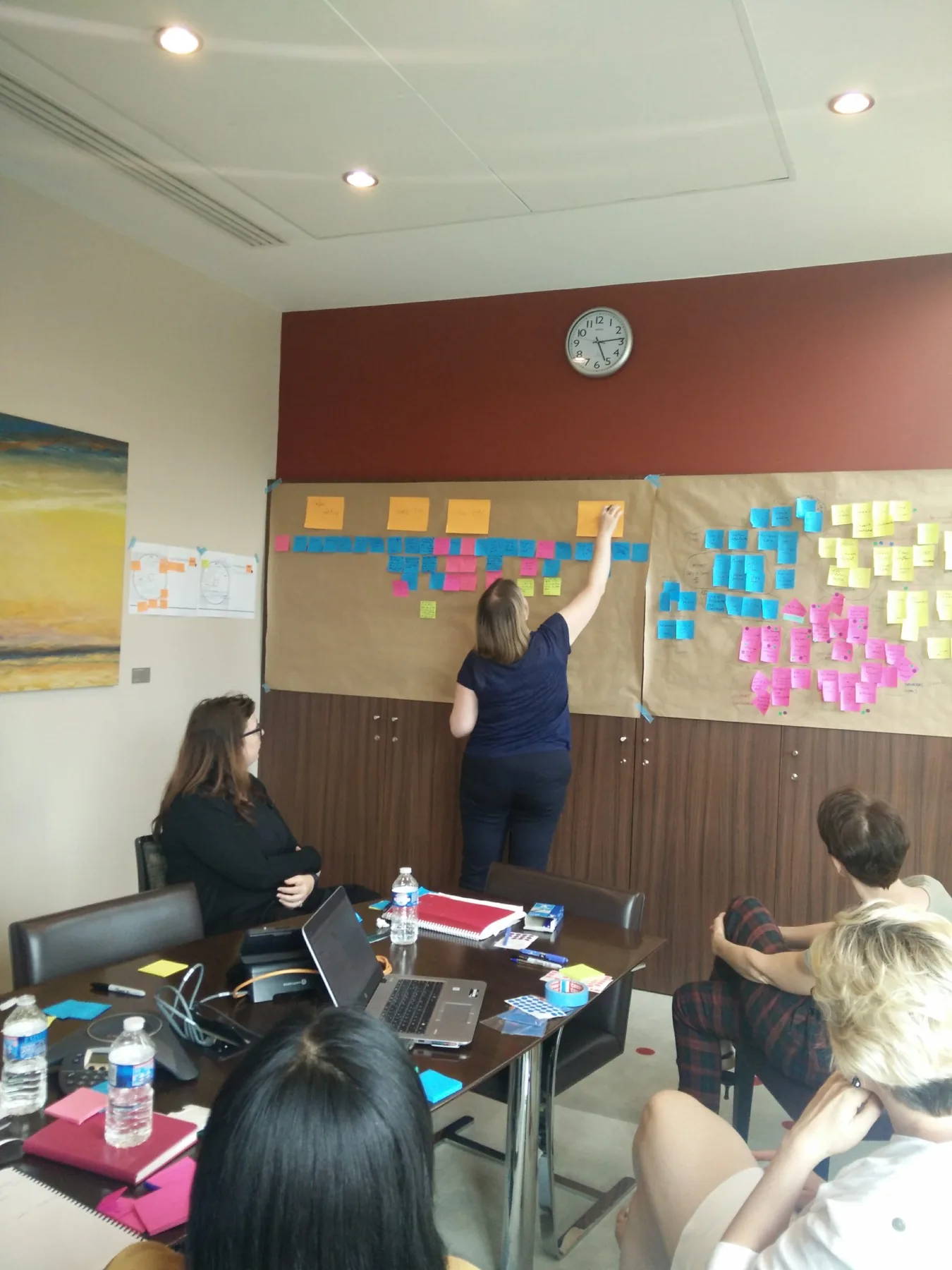
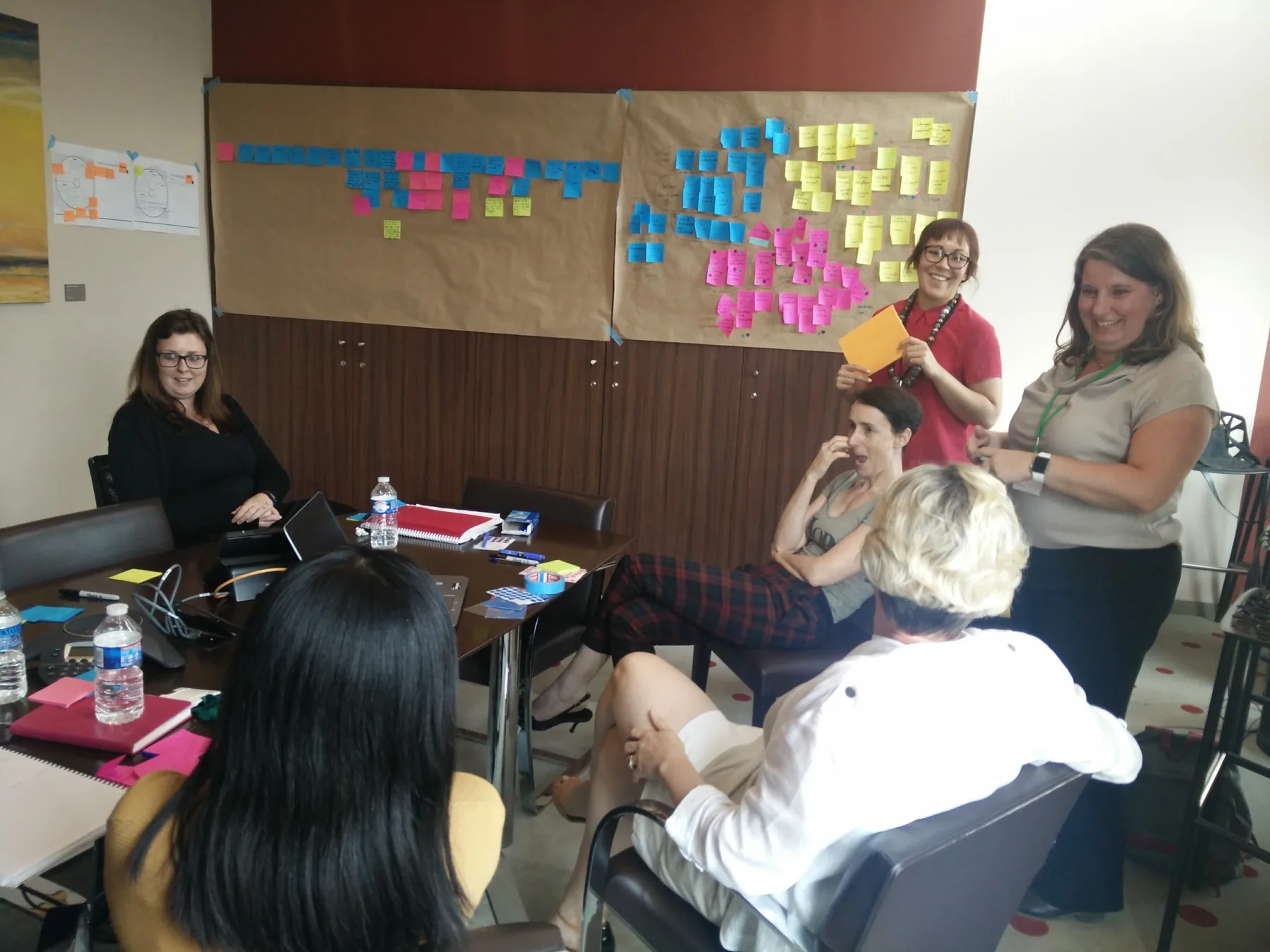
Format: full-day workshops on site with the bank's employees and managers. Kraft paper covered the walls. Blue notes captured the environment and context, yellow notes described users, and pink notes recorded expression and goals. Participants wrote, grouped, and voted on their own material, so the findings belonged to them before they became recommendations.
Persona and context mapping: one veteran arrived saying the workshop was probably a waste of a morning, then wrote eleven notes, more than anyone else in the room. The user landscape was more complex and honest than an org chart. Groups ranged from disenchanted to enthusiastic, new joiner to twenty-year veteran, and manager to high potential. Each also covered remote work, busy periods, and crises. Mapping this range stopped us from designing for an imaginary average employee.
The findings were written by the participants themselves. A recommendation you wrote with your own hand is hard to argue with.
03 · Journeys
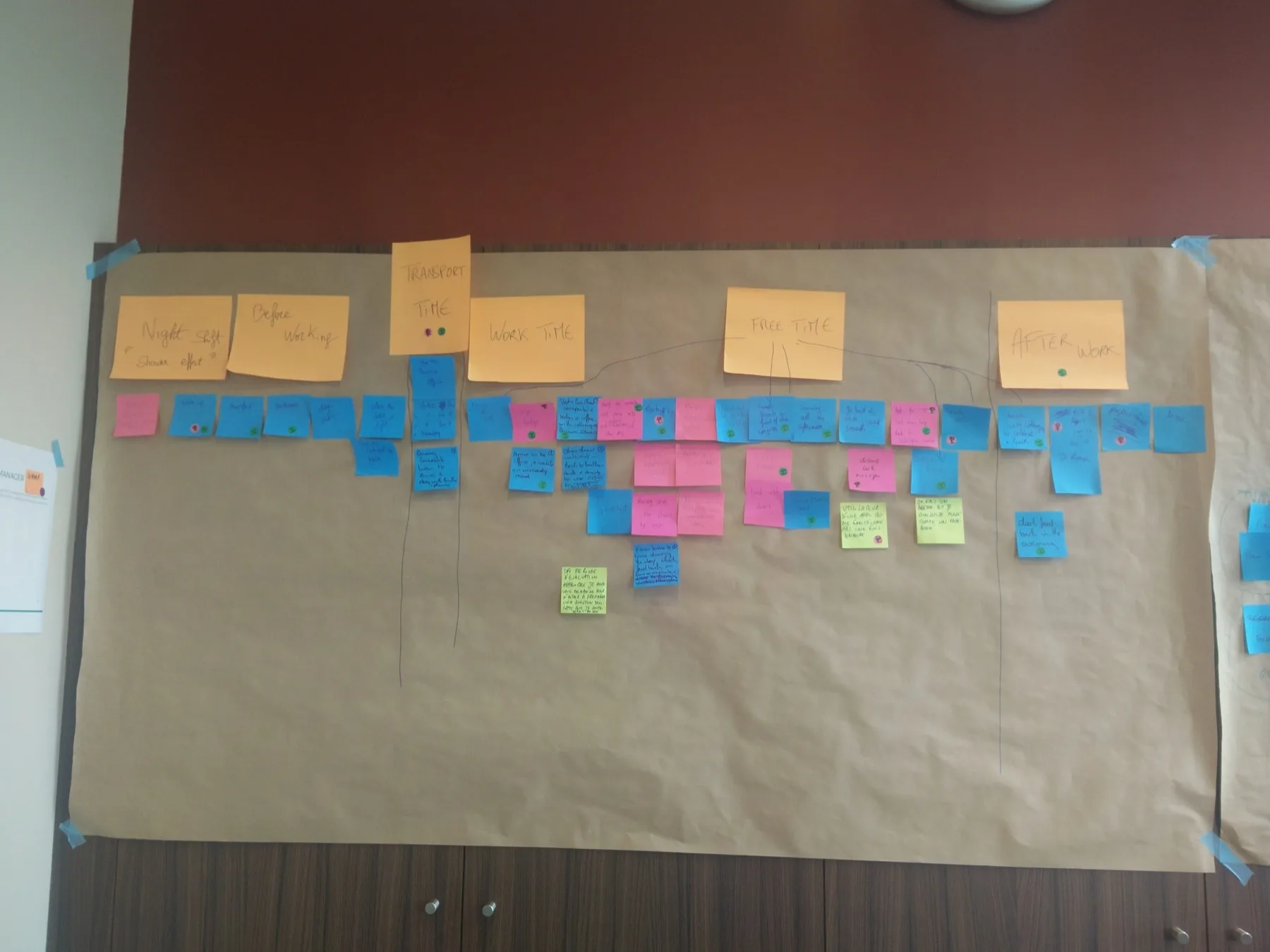
Day-in-the-life mapping: employees mapped their full day across six stages: night shift, before work, transport time, work time, free time, and after work. We looked beyond the hours spent at a desk to find where an internal product could genuinely fit into someone's routine, instead of assuming they had time for it.
What the wall showed: night-shift workers called the ideas that came after a shift the “shower effect”. The key moments were transitions: the commute when people read, the handovers when information went missing, and the after-work period when feedback finally got written. None of this appears in a requirements document. By the end of the session, it was on the wall, voted on and prioritised by the people who experienced it.
04 · Testing
Discovery groups: alongside the mapping work, smaller sessions explored the groups revealed by the personas, from head-office managers to night-shift operations. The bilingual format mattered. People describe frustration precisely in their own language and more diplomatically in a second language; the honest version is more useful.
Usability testing: simple, unglamorous, and effective. Employees used existing tools and early concepts while thinking aloud. We recorded problems, counted patterns, and added the findings to the prioritised opportunities on the wall. No lab or one-way mirror, just users, tasks, and notes. That is usually all usability testing needs.
Nothing in the month was unusual: personas, journeys, discovery groups, and usability tests. The skill was in running them well, quickly, and in front of the client.
Outcomes
Outcome: by the end of the month, the engagement was won and underway. The bank's teams had built their own personas, mapped real rather than assumed workdays, and prioritised opportunities validated through testing. The research walls stayed with the client, along with the momentum.
The shape of the work: consulting at this pace is its own discipline. There is no time to become indispensable, so the goal is to become unnecessary as quickly as possible. Leave behind tools that keep working after you go. The mission ended when the services were no longer needed, exactly as a one-month engagement should.
What it left behind: confidence that a discovery programme can be built from scratch in weeks, in a conservative industry, in two languages, using only kraft paper and three colours of sticky note. I have used that skill on every engagement since, and the night shift's shower effect still comes up years later.