A design journey through three product identities, from crowdsourcing ideation to a brainstorming tool to a project portfolio management platform, driven by user research and the conviction that the right problem is worth more than the right solution.
Lead Product Designer · SaaS · 2017–2023
01 · Problem
Constraint: the product had three independent interfaces: client-facing challenge management, backend administration, and company-facing dashboards. They had evolved without a shared design foundation. Screens followed different layout rules, no component system existed, and visual inconsistencies multiplied across all three interfaces. The new design system gave them shared typography, spacing, colour, and component behaviour.
Market gap: the crowdsourcing product worked, the design system made it consistent, and revenue was steady and sustainable. But engagement was not growing. The product solved a real problem, but the market was smaller than the technology deserved. The design challenge shifted from fixing the interface to asking whether the product solved the right problem.
02 · First pivot
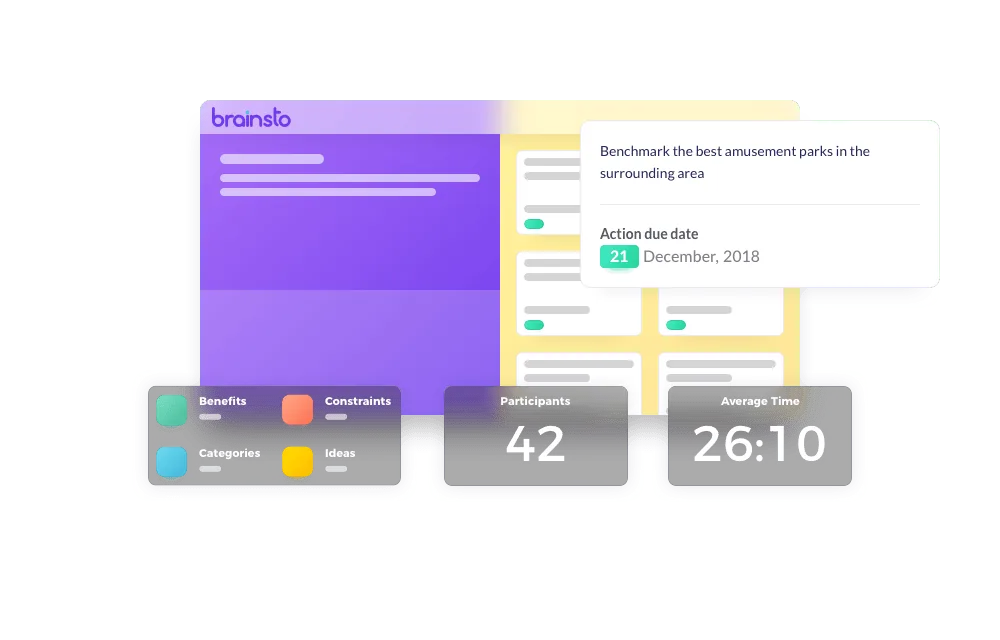
Decision: focus the product on brainstorming, the feature users liked most. The tool launched under its own name, Brainsto. It was rebuilt from scratch with new information architecture, interaction patterns, and a visual language designed for generating and organising ideas.
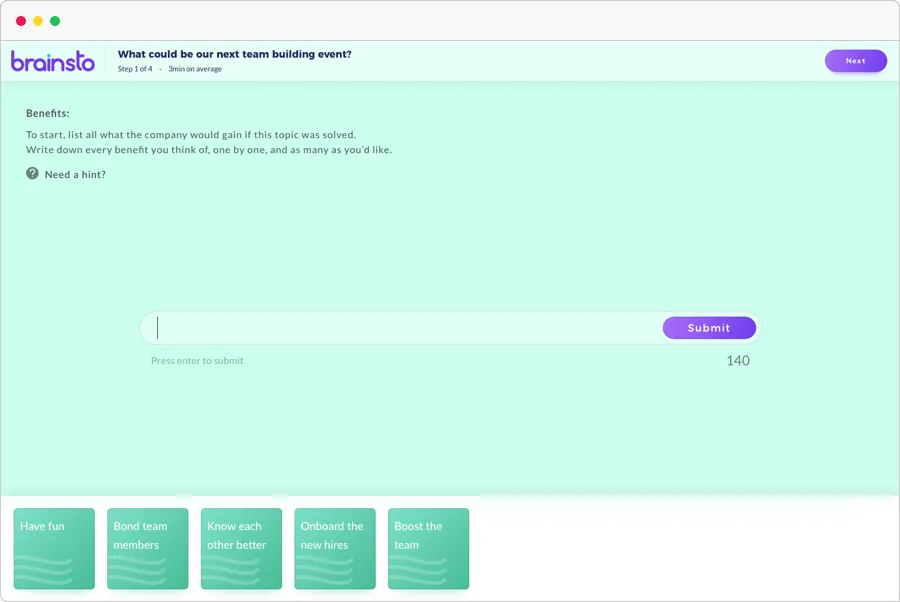
Session design: instead of a blank page, Brainsto used guided async sessions: a framed question, timed steps that explained the benefits before asking for ideas, one input, and a card for every submission. This structure made it easier to contribute and kept the results organised for later action.
Signal: feedback was positive, but user behaviour told a different story. One session produced more than fifty idea cards in forty minutes. A month later, not one had moved. Teams eagerly generated and sorted ideas and made plans, then stopped. There was no clear way to turn ideas into action. Brainsto captured creativity well, but ended at that point. The real work happened in tools that were not built for collaborative decisions.
The bottleneck was not how teams generated ideas but what happened after the ideas existed.
03 · Discovery
Research: structured sessions covered existing customers and prospects from both product phases. Participants described how they handled ideation, project intake, resource planning, and portfolio reviews. Almost every session revealed the same pattern.
Finding: teams were overwhelmed by separate project management tools: one for intake, another for planning, and a third for tracking, with spreadsheets and slides filling the gaps. The real opportunity was not a better brainstorming tool. It was a project portfolio management platform that connected the full workflow from idea to execution. The two earlier products made this insight possible: crowdsourcing taught us about structured ideation, and Brainsto exposed the execution gap.
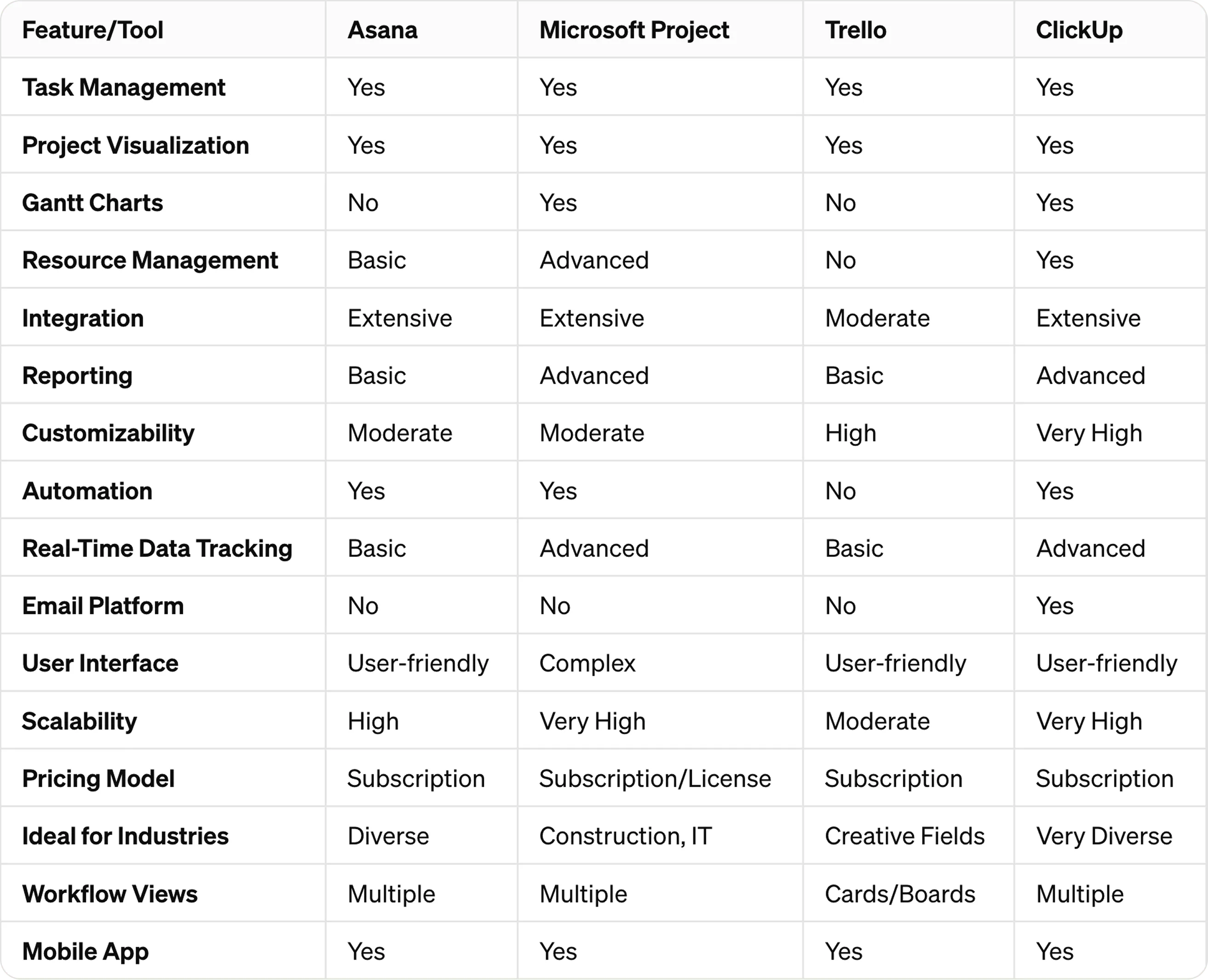
Competitive landscape: we compared the PPM idea with Asana, Microsoft Project, Trello, and ClickUp across task management, Gantt views, resource management, reporting, and pricing. Each tool had its strengths, but none connected structured ideation with portfolio-level decisions. That was the gap the first two products had exposed.
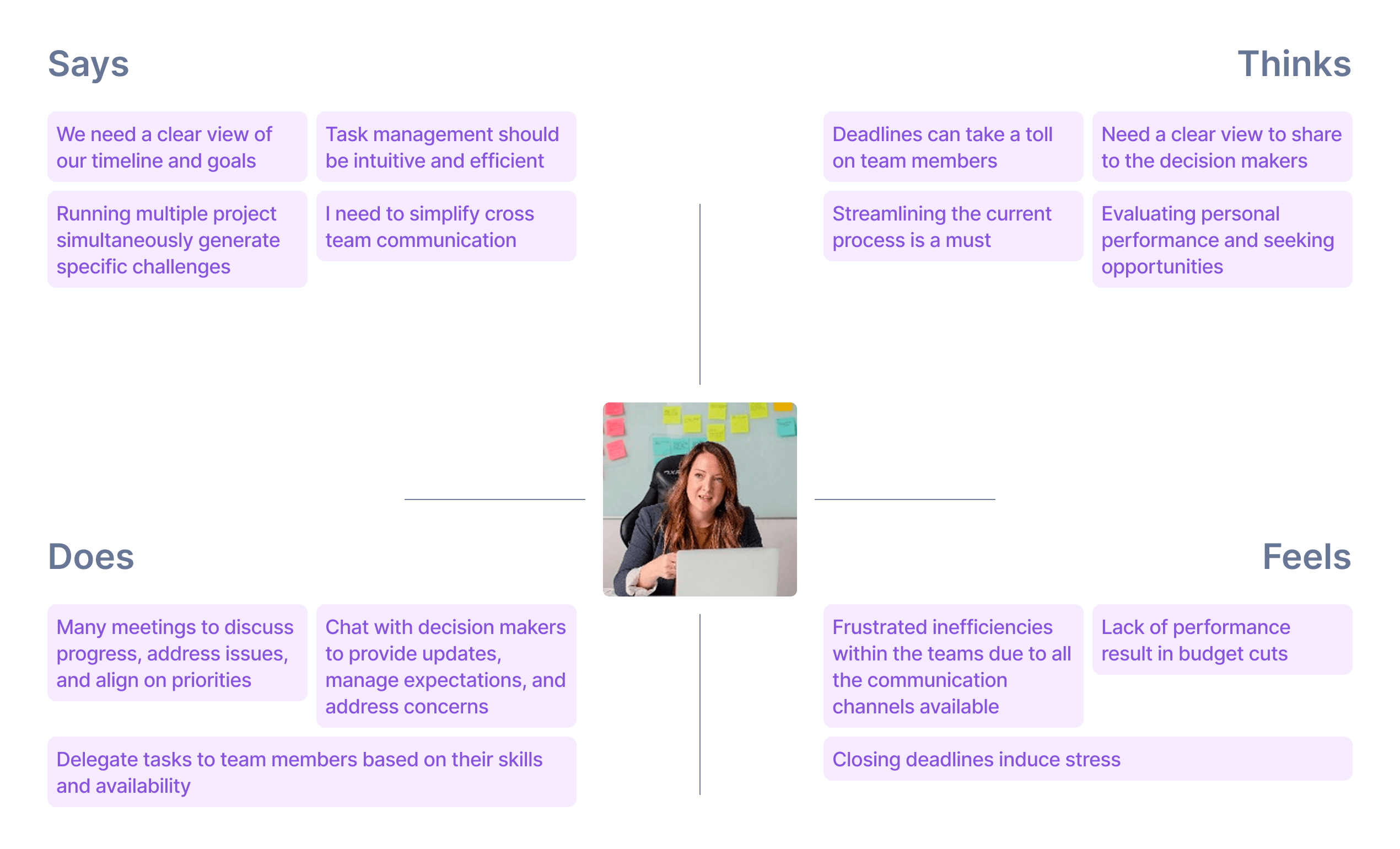
Empathy mapping: sessions with project managers made the gap clear. They said they needed clear timelines and simpler communication across teams. They felt deadline pressure and frustration with inefficient work spread across too many channels. The product had to bridge that divide.
04 · Second pivot
Constraint: the information architecture had to move from sessions and ideas to projects, initiatives, resource allocations, and portfolio-level reporting. The mental model shifted from exploring ideas to narrowing them down, and from creation to evaluation. A full UX research cycle included analysis of existing PPM tools, contextual interviews with project managers and portfolio directors, workflow mapping, and prototype tests with prospective customers.
Design response: the design system was rebuilt for the third time. It now covered intake, planning, resource management, and reporting with consistent patterns across modules. Navigation centred on portfolio views, with access to individual projects and tasks. The visual language became more structured and professional to suit data-heavy resource and budget decisions. Several rounds of usability testing refined the intake pipeline, resource allocation board, and portfolio dashboard until feedback moved from structural changes to surface polish.
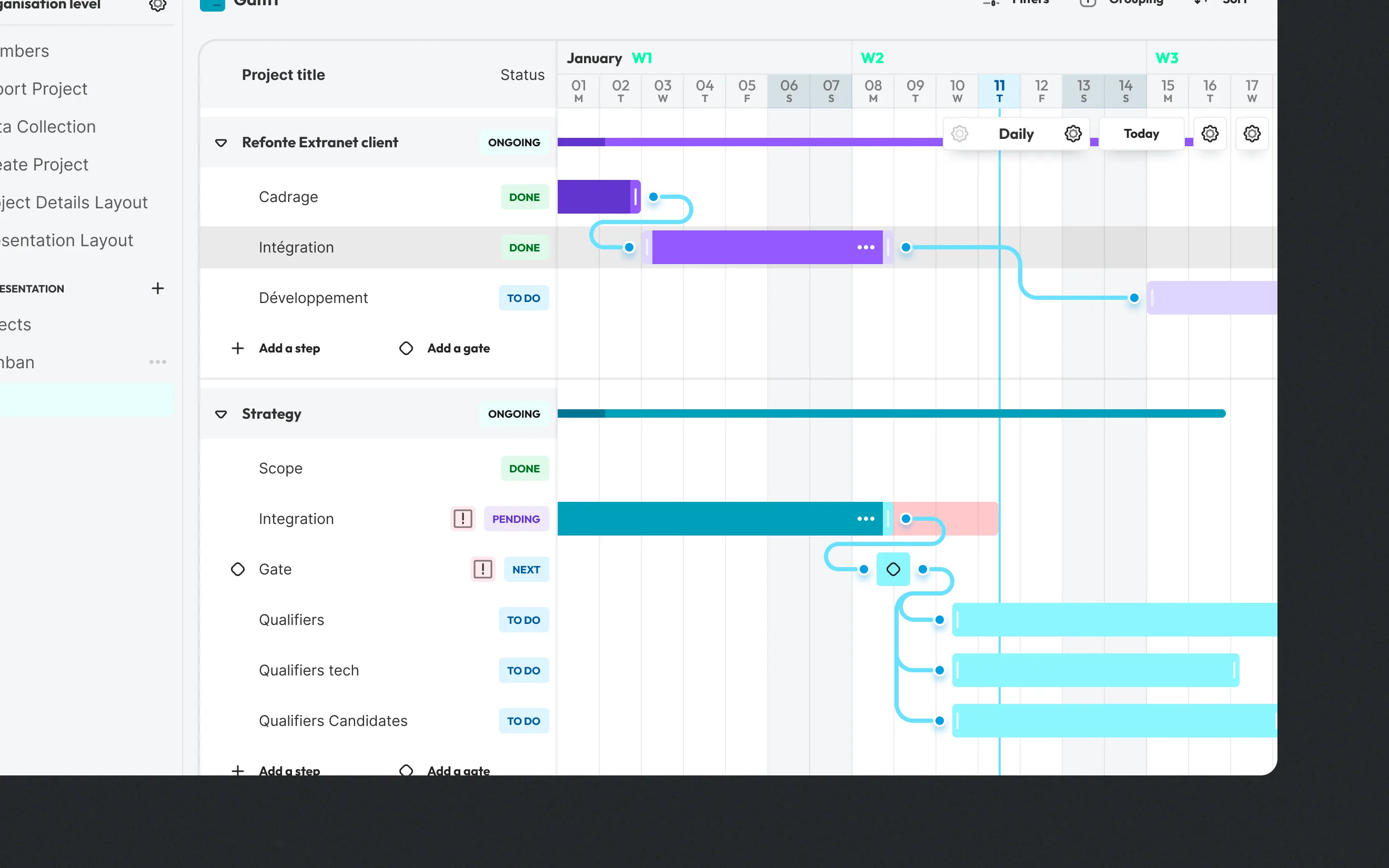
Portfolio structure: portfolios used steps and gates instead of flat task lists. The Gantt view showed dependencies, phase gates, and statuses at a glance, so a portfolio director could assess an initiative without opening each project.
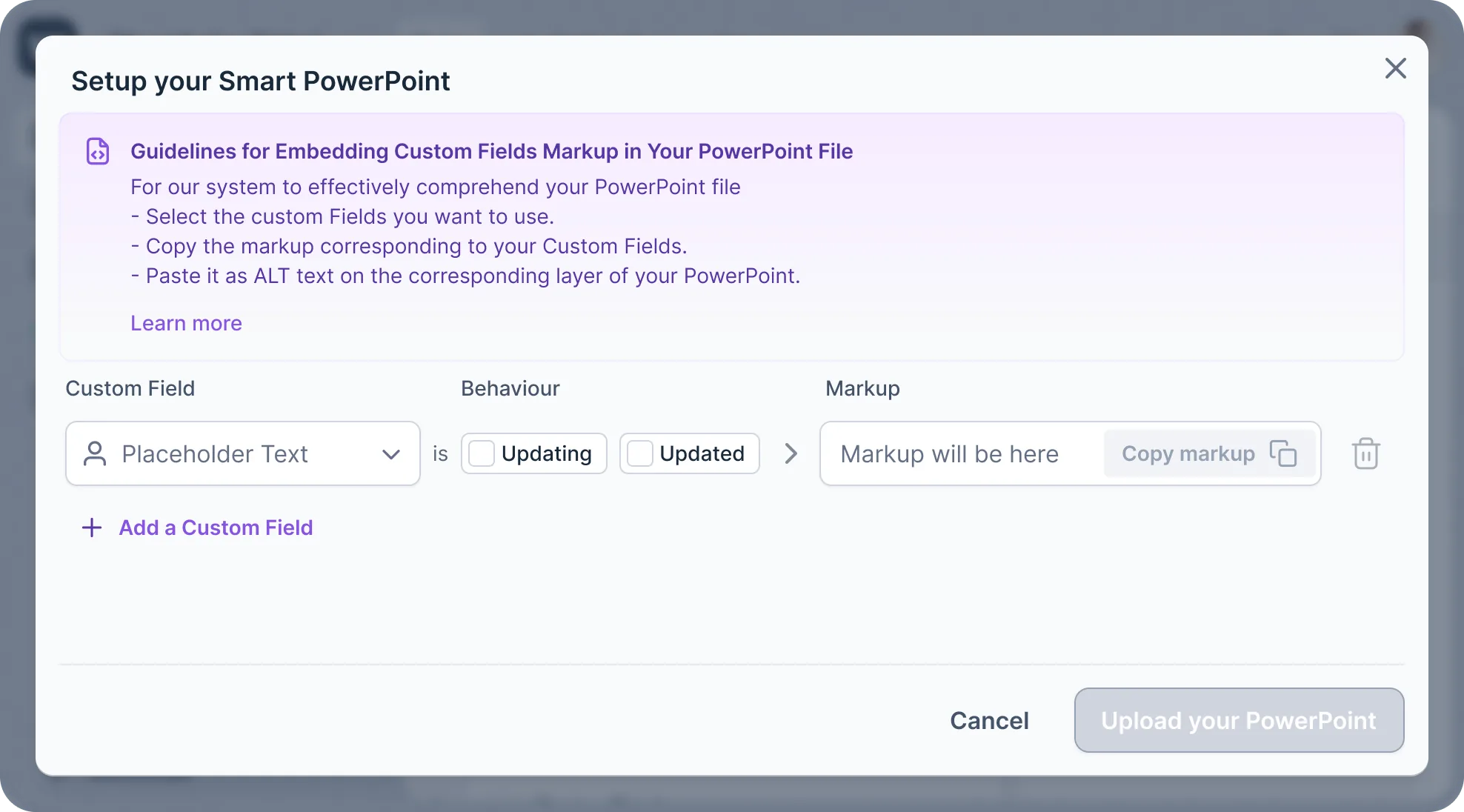
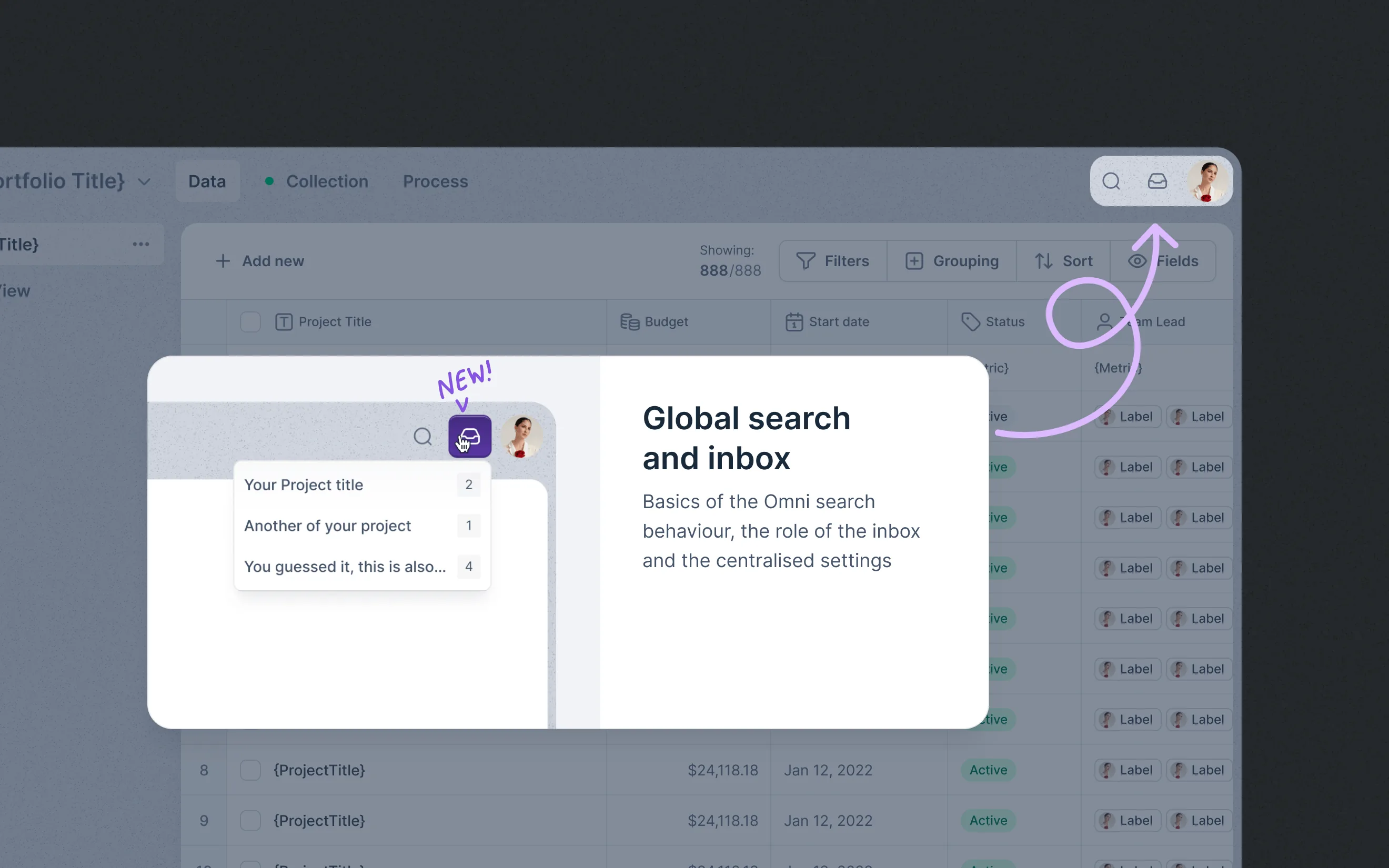
Data model: the Smart PowerPoint exporter came from a portfolio director who admitted, almost apologetically, that they rebuilt the same deck every Monday morning. It linked live portfolio data to slide placeholders, so status decks updated themselves instead of being rebuilt by hand. Underneath, each collection is a table of custom fields that teams can shape: show or hide fields, drag them into a new order, then filter, group, and sort from the column header. These tables replaced the spreadsheets that had filled the gaps. Reporting followed the same logic, from global search to a centralised inbox.
Build a platform that adapts to how teams actually work, not one that forces them to adapt to the software.
Outcomes
Product-market fit: the PPM platform found its market. The fifty-plus idea cards that had gone nowhere now had a path forward. The company was acquired on the strength of the pivot, validating the research behind the move from brainstorming to portfolio management.
Three design systems, one trajectory: each product needed a new design system, and each system shaped the next. Crowdsourcing taught consistency across many interfaces. Brainstorming taught how to improve a focused flow. The PPM system combined both lessons. This path was not on a roadmap, but the same method guided every phase: ship, listen, pivot.
Design as product discovery: user research defined the pivot, workflow design shaped the product architecture, and the visual system made the platform consistent. Together, these design outcomes directly influenced the company's direction and eventual acquisition. The work began as interface advice and became the way to find the right product.
Visit braineet.com